Energy Management Systems at the Electric Bus Depot
The key to the transition to electric mobility lies in the intelligent management of energy flows, load limits, and charging schedules—and in the seamless interaction of the underlying systems.




Operational reliability, cost-effectiveness, and scalability thanks to a clear system architecture
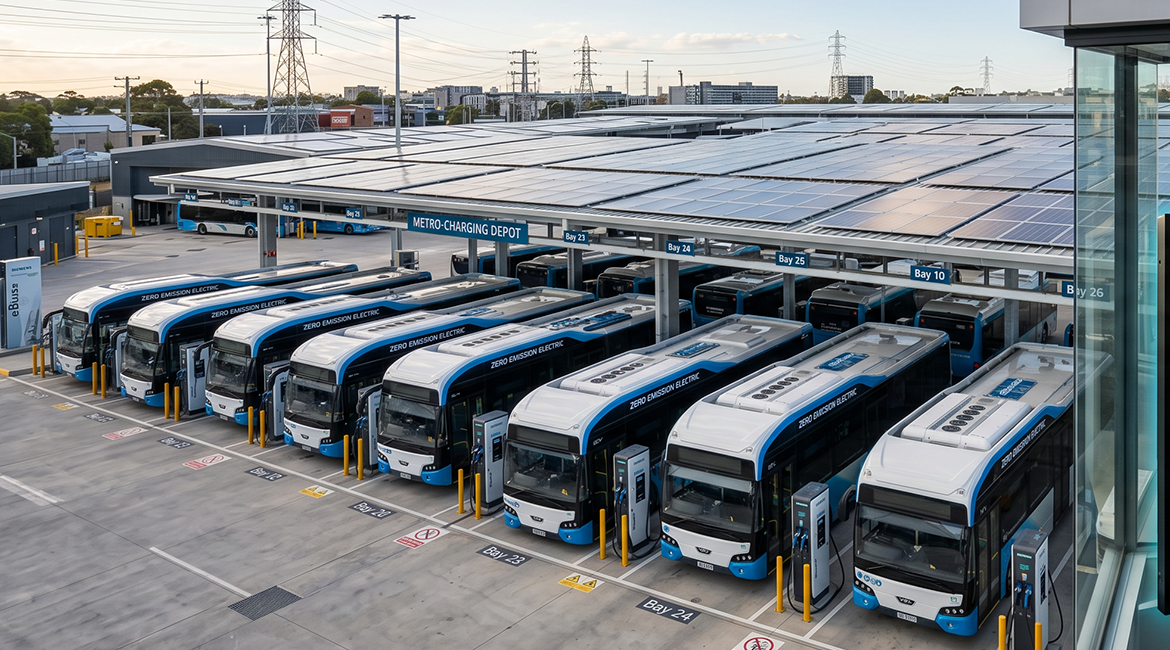
When transitioning to electric mobility, many bus companies initially focus on vehicles and Charging Infrastructure. But the key to success lies deeper: in the intelligent management of energy flows, load limits, and charging schedules—and in the seamless interaction of the underlying systems. The following article was published in the journal Der Nahverkehr (in German).

Senior Consultant Energy Markets

Head of Sales & Marketing
The key to the transition to electric mobility lies in the intelligent management of energy flows, load limits, and charging schedules—and in the seamless interaction of the underlying systems.

The energy transition is fundamentally reshaping the entire energy supply. This directly impacts you as an industrial consumer: you can actively participate in the energy market and significantly reduce your own electricity costs.

In this article, we will show you how you can optimize your energy costs and benefit from other advantages through peak load management, consumption forecasts and the automated control of flexible systems.
Bild: Generiert mit Adobe Firefly